
Site Logo
Talk to Our Experts
AI Video Intelligence · Hospital Security System

Hospital Security System That Watches Every Ward, Every Second

Easycomm is an AI-powered hospital security system that turns your existing camera network into a 24/7 patient-safety partner. It watches every ward, every corridor, every restricted door - and pushes the one alert that matters to the nearest nurse, guard, or charge nurse in seconds, not after the incident report gets filed.

The Problem

Why hospitals can't run on cameras alone anymore

Passive CCTV records everything and prevents nothing. By the time someone reviews the tape, the patient's already fallen, the visitor's already left the pediatric wing, or the incident's already become a lawsuit. Three problems keep showing up in every hospital security review we run.

Patient safety risks go undetected until it's too late

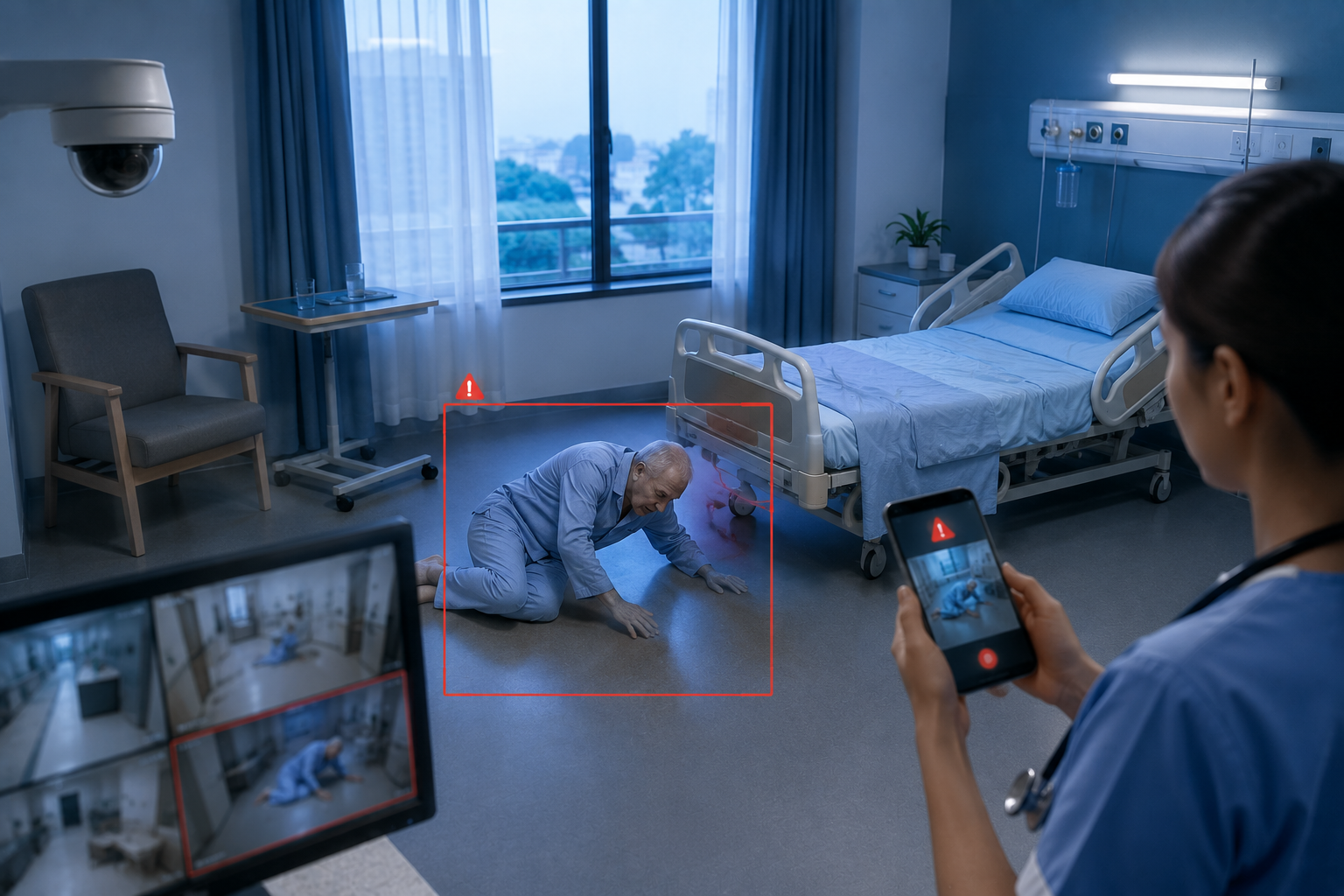
The CDC and AHRQ estimate 700,000 to 1 million patients fall in U.S. hospitals every year, and roughly a quarter of those falls cause injury. A single overnight nurse covering 8-10 beds can't watch every room and chart vitals at the same time. Falls, wandering dementia patients, and post-sedation confusion all happen in the gaps between rounds - the exact gaps a camera already covers but nobody's watching live.
Unauthorized area access puts patients and staff at risk

NICUs, med rooms, pharmacies, and restricted wings need to stay restricted - not just on paper, but in practice. Infant abductions from healthcare facilities are rare, but historically hospitals account for roughly half of all documented cases, and most happen when someone walks straight through a door that should have stopped them. Badge systems get propped open. Tailgating happens. A hospital security system that only logs the breach after the fact is a hospital security system that failed.

Response across busy wards is too slow

A code, a fall, a combative visitor - in a 200-bed hospital, the person closest to the event is rarely the person who gets notified first. Manual monitoring means someone has to be looking at the right screen at the right second. Multiply that across dozens of wards and shift changes, and the average response time balloons - exactly when minutes decide outcomes.

What We Build

How Easycomm's video analytics for healthcare actually works

We didn't build generic surveillance and slap a "healthcare" label on it. Every module below was shaped around what actually goes wrong on a hospital floor.

Live crowd density heatmaps

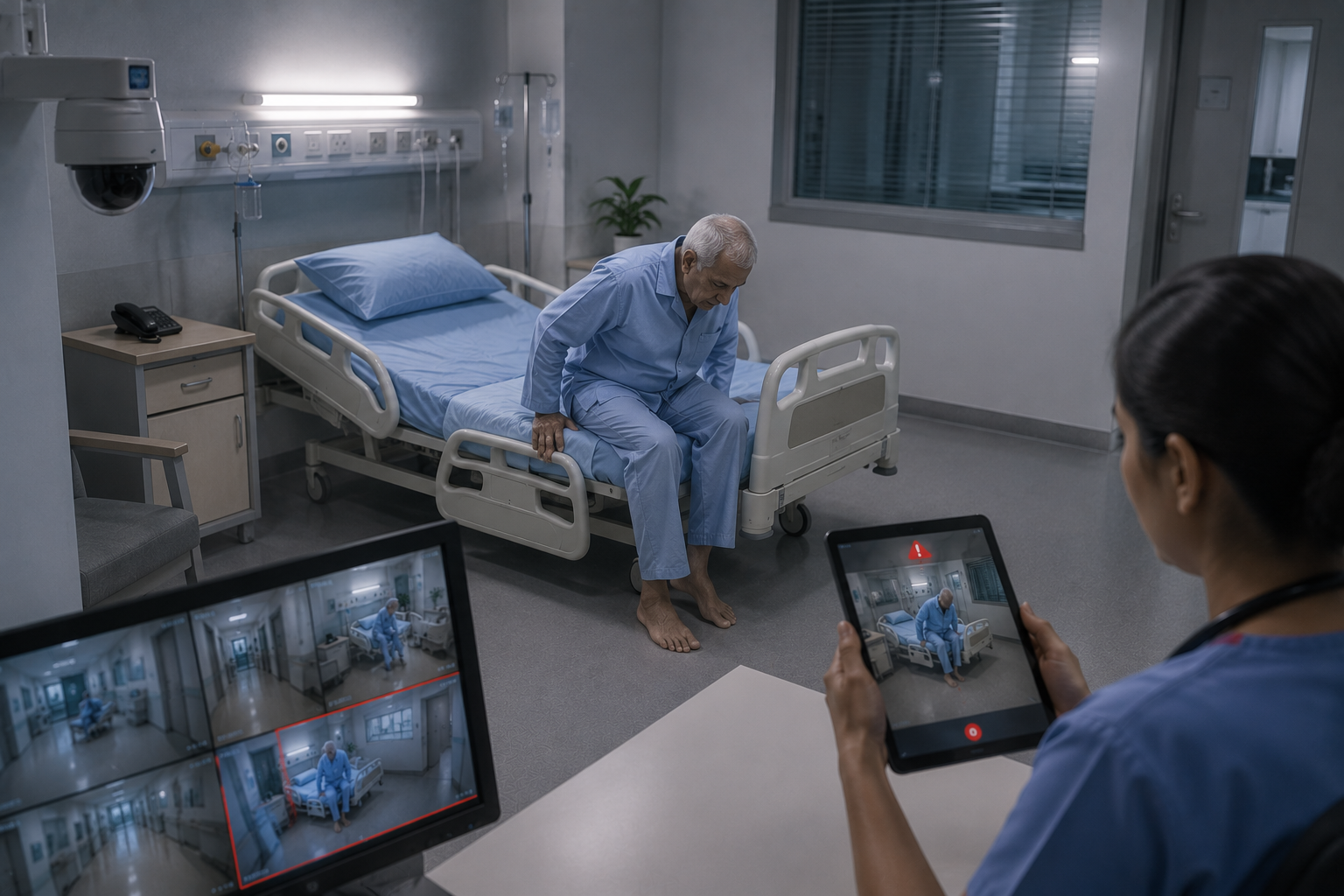
Real-time fall detection

AI flags a patient down the second it happens, not on the next room check.

Vehicle and pedestrian flow counting

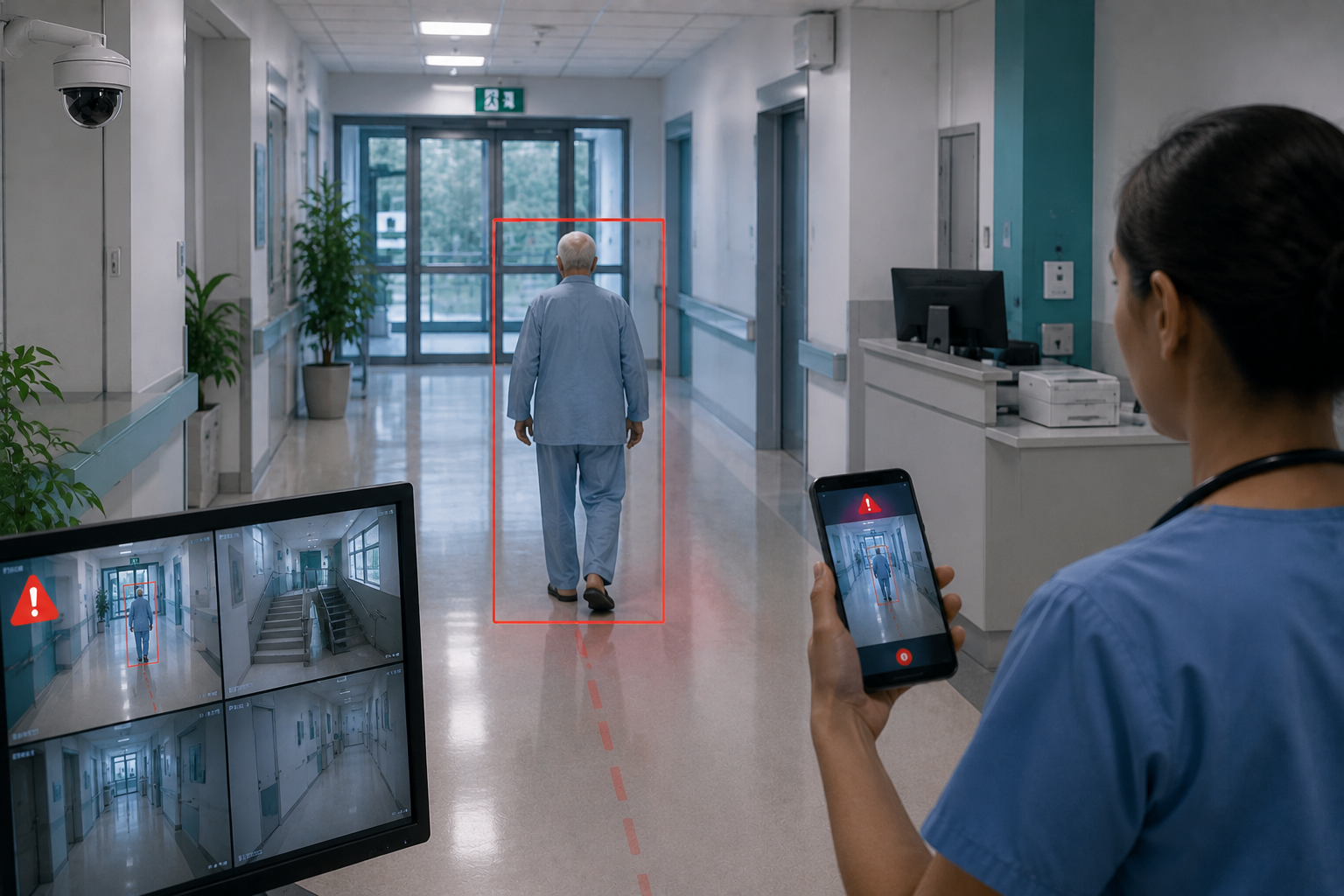
Wander alerts

dementia and post-op patients heading toward exits, stairwells, or unauthorized zones trigger an instant notification.

Stalled-vehicle and obstruction detection

Bed-exit monitoring

catches high-risk patients attempting to get up unassisted, before the fall happens.

Event-day surge monitoring

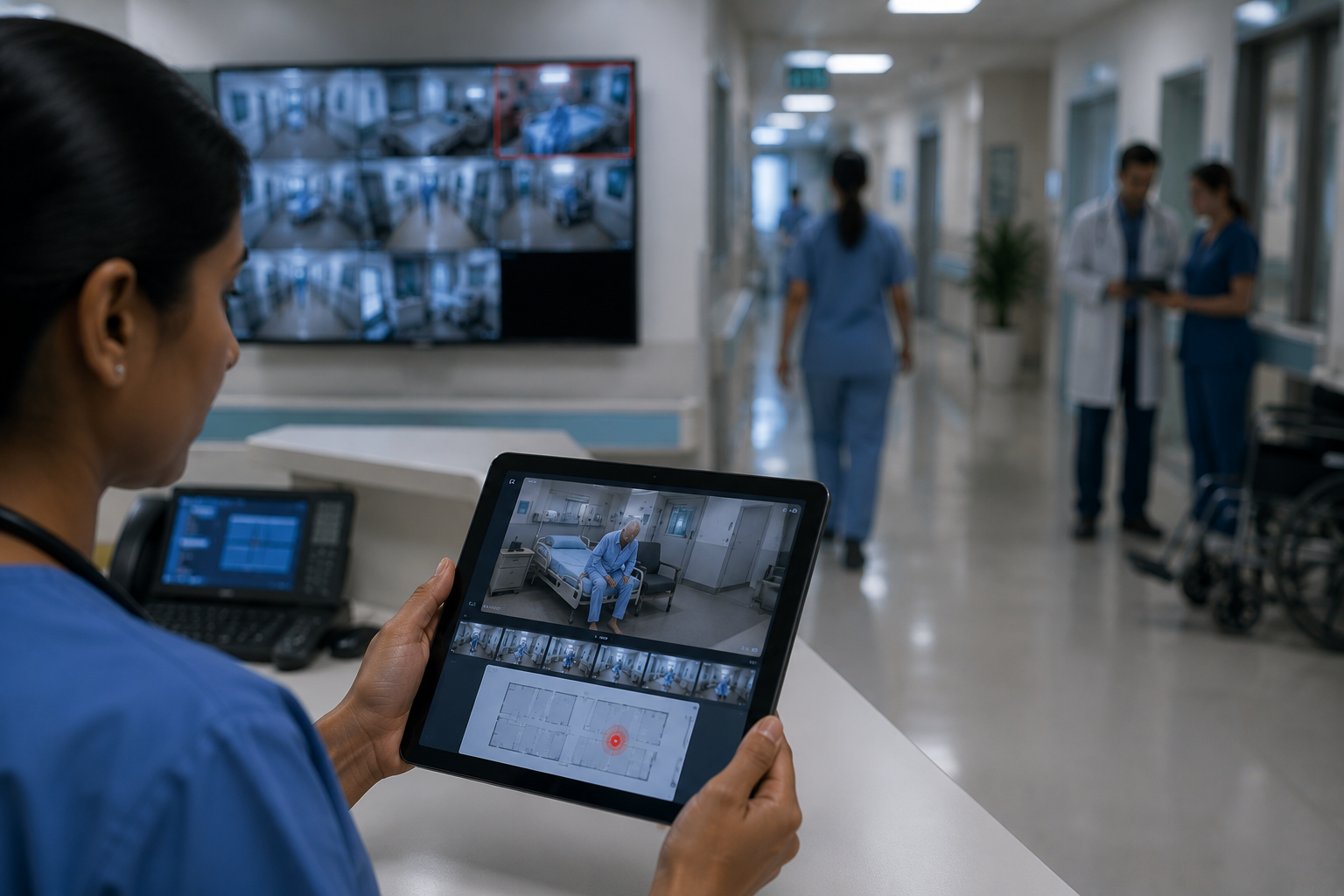
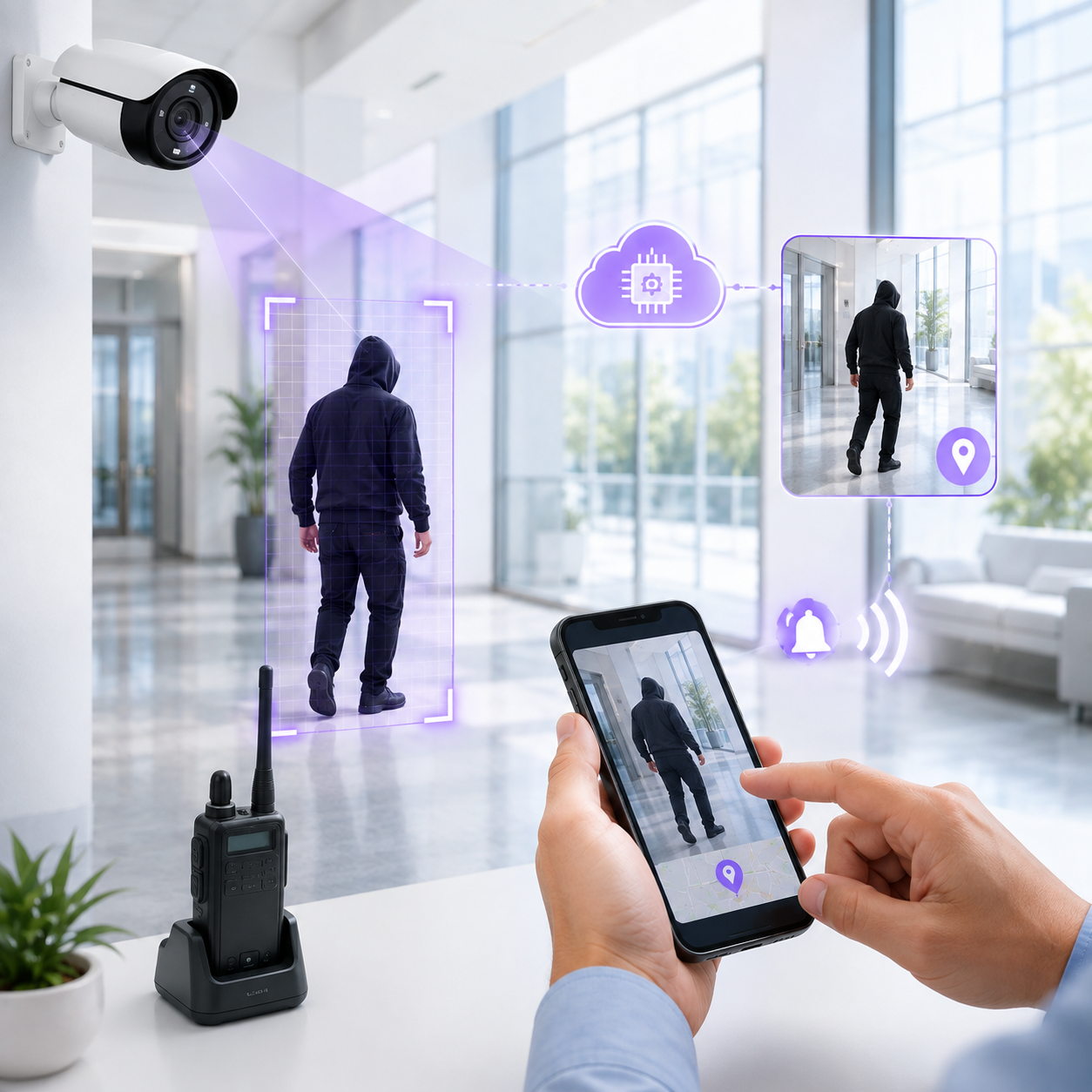
Context-rich clips

staff get a short video clip and location, not a wall of raw footage to scrub through.

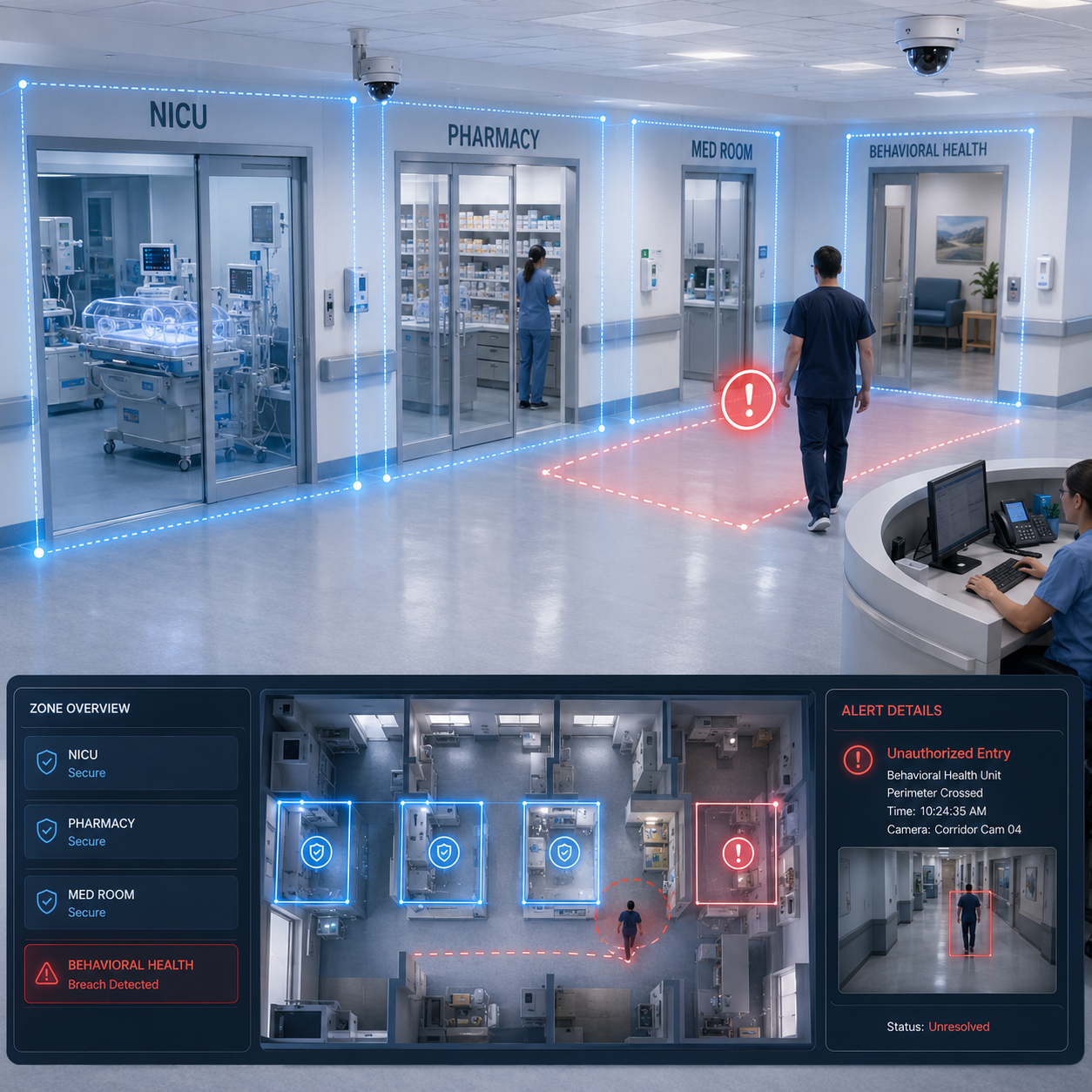
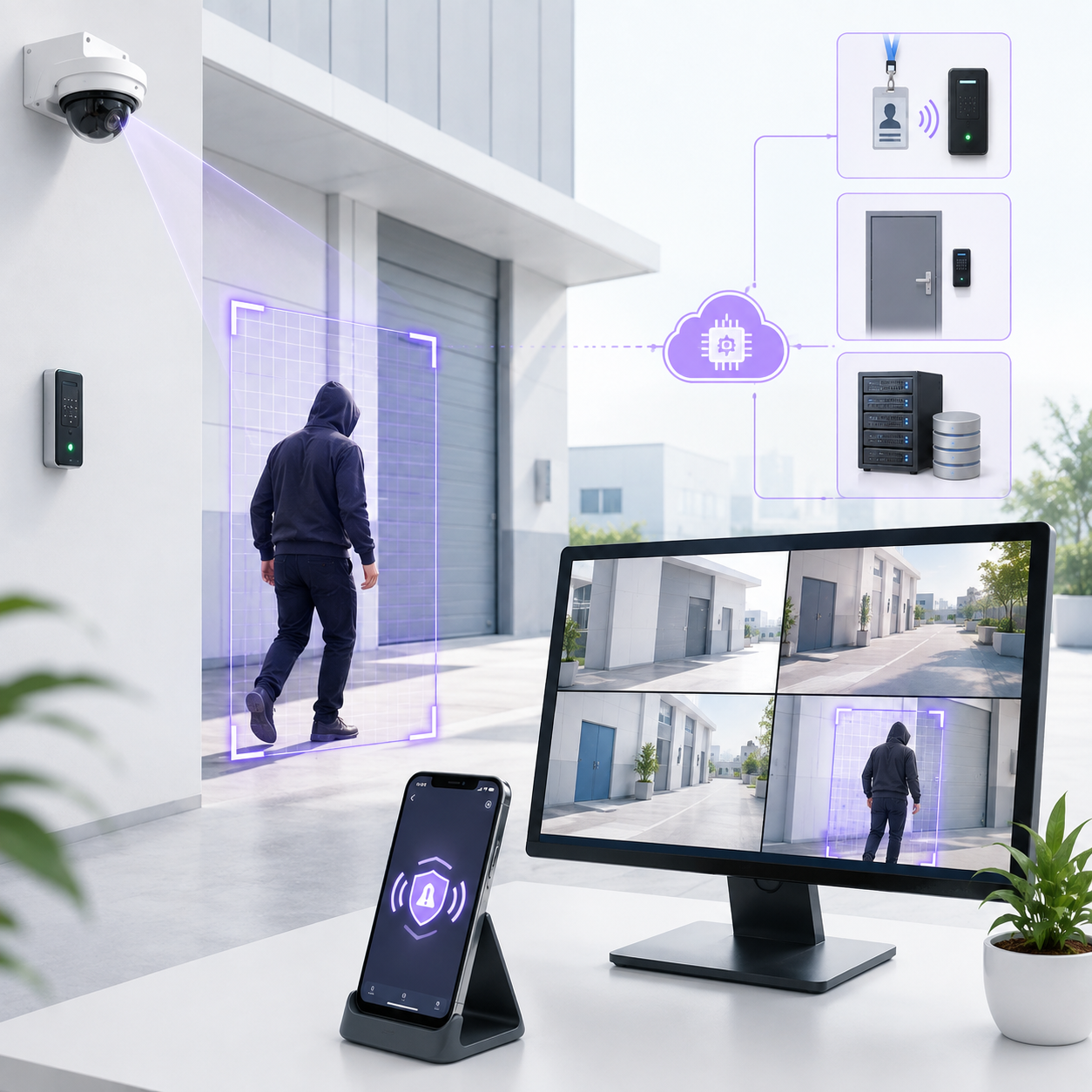
Virtual perimeter zones

Virtual perimeter zones

around NICUs, pharmacies, med rooms, and behavioral health units - crossed without authorization, it's flagged instantly.

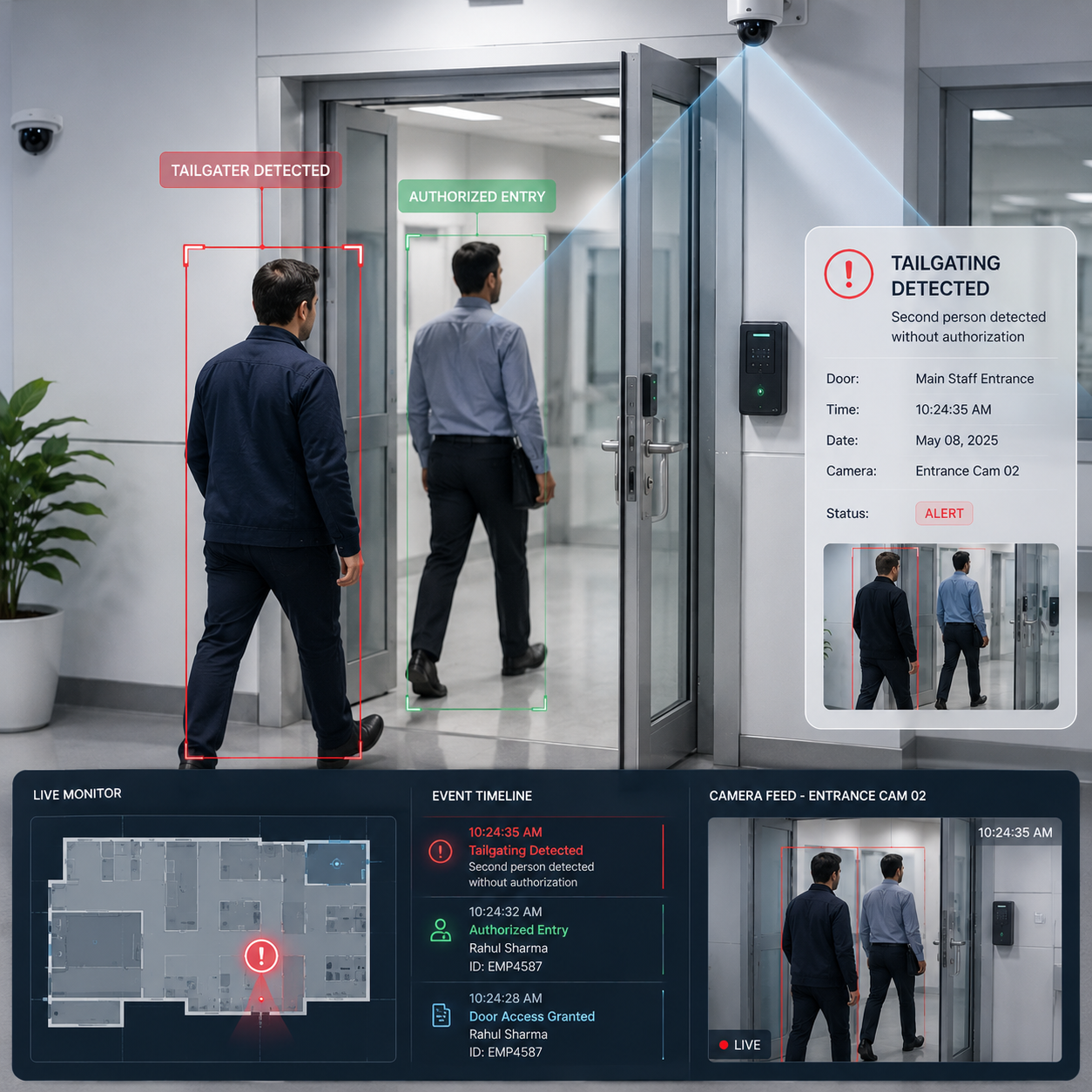
Tailgating detection

Tailgating detection

catches the second person who slips through a badge-controlled door behind an authorized staff member.

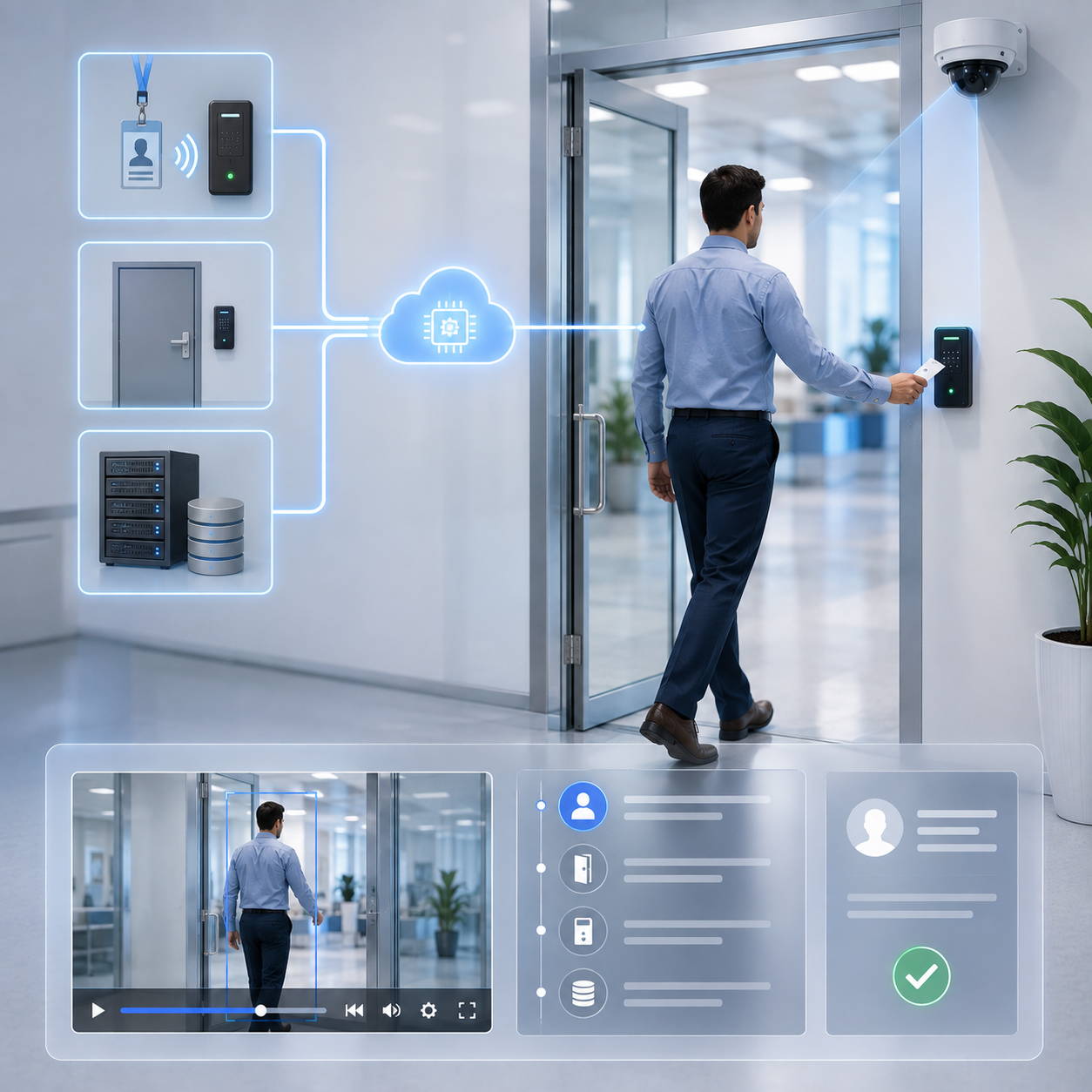
Access system integration

Access system integration

Easycomm layers on top of your existing badge and door-control systems, cross-checking video against access logs automatically.

After-hours lockdown alert

After-hours lockdown alerts

any motion in a restricted zone outside approved hours gets escalated immediately.

Sub-5-second alerting

Sub-5-second alerting

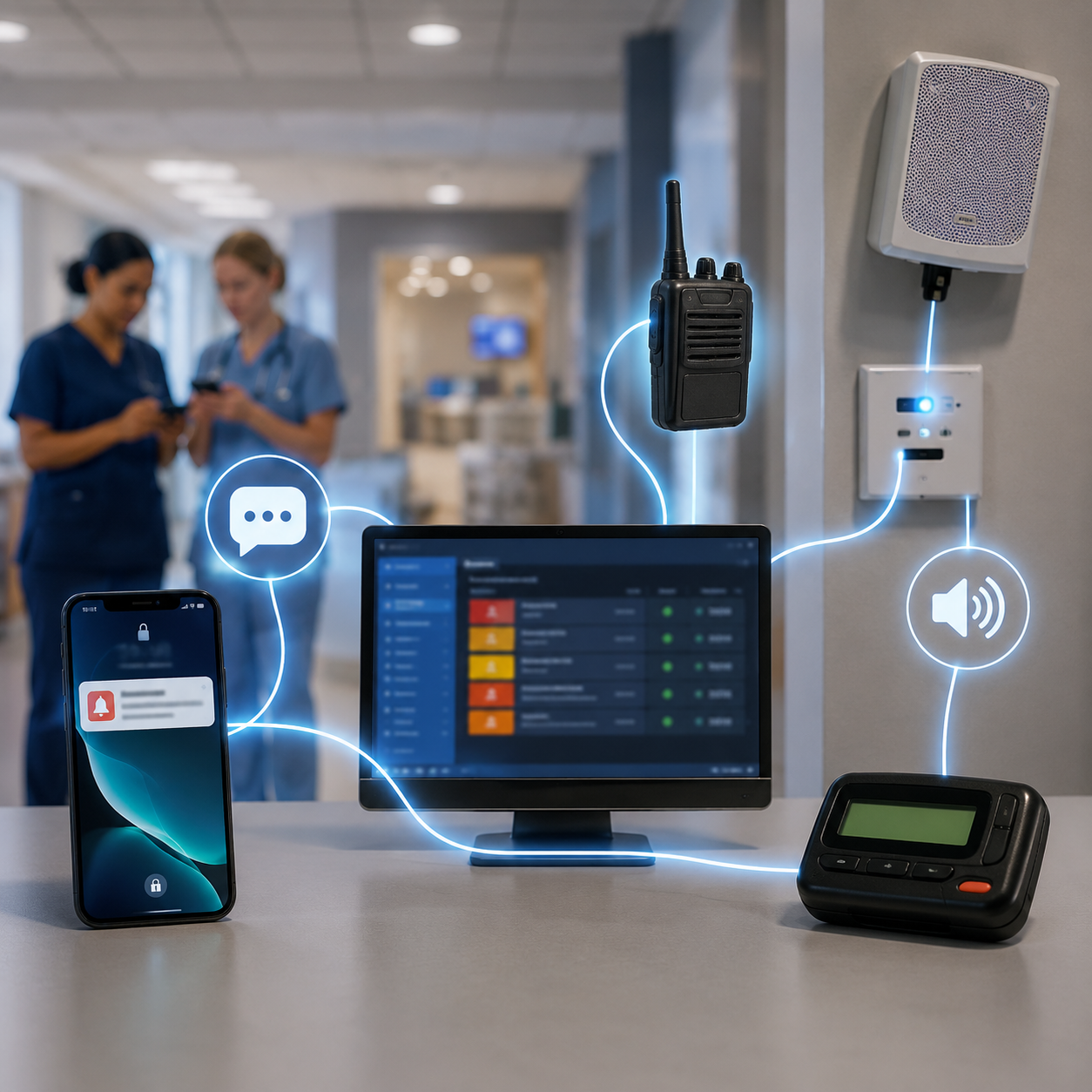
the moment AI flags an event, the clip and location land on the nearest available staff device.

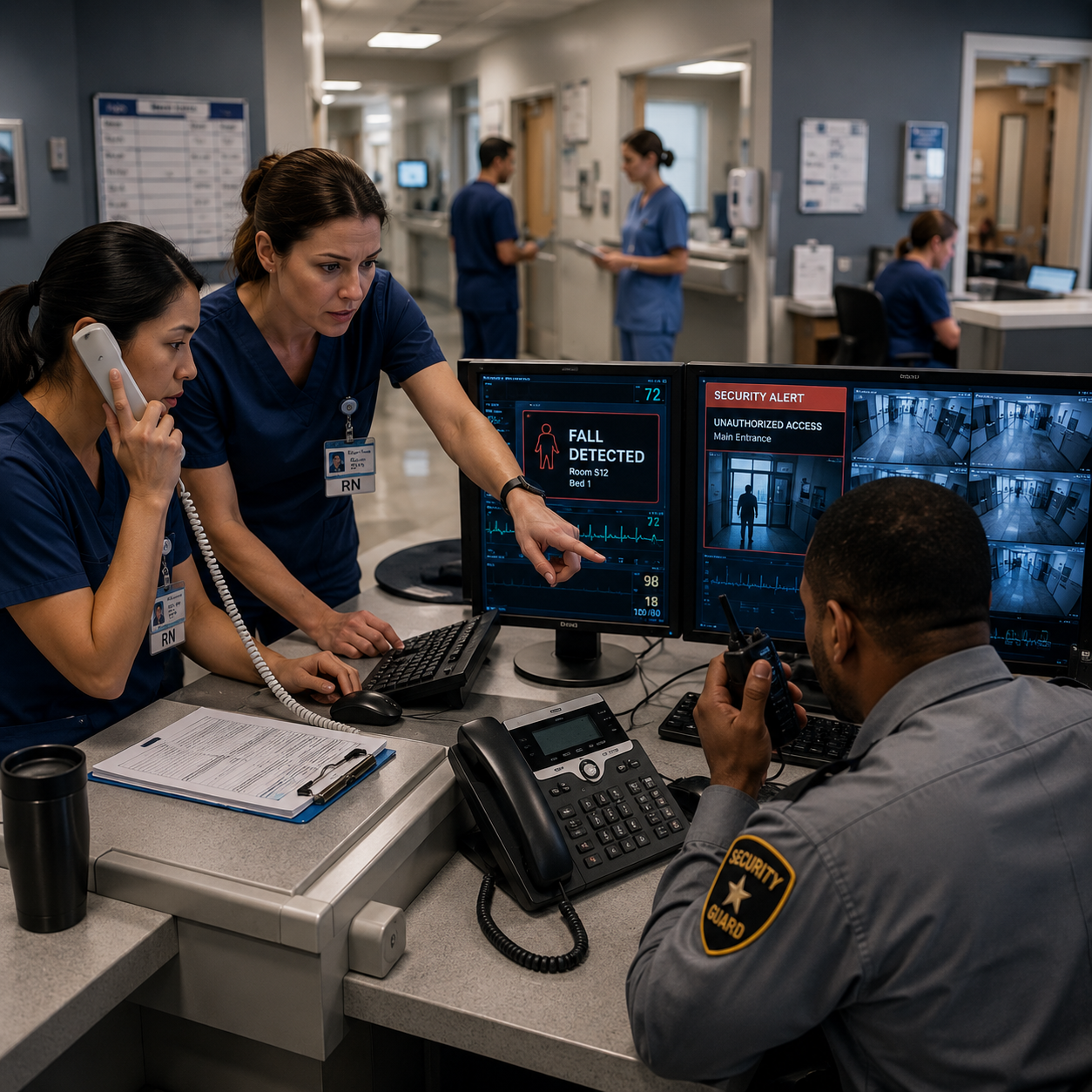
Role-based routing

Role-based routing

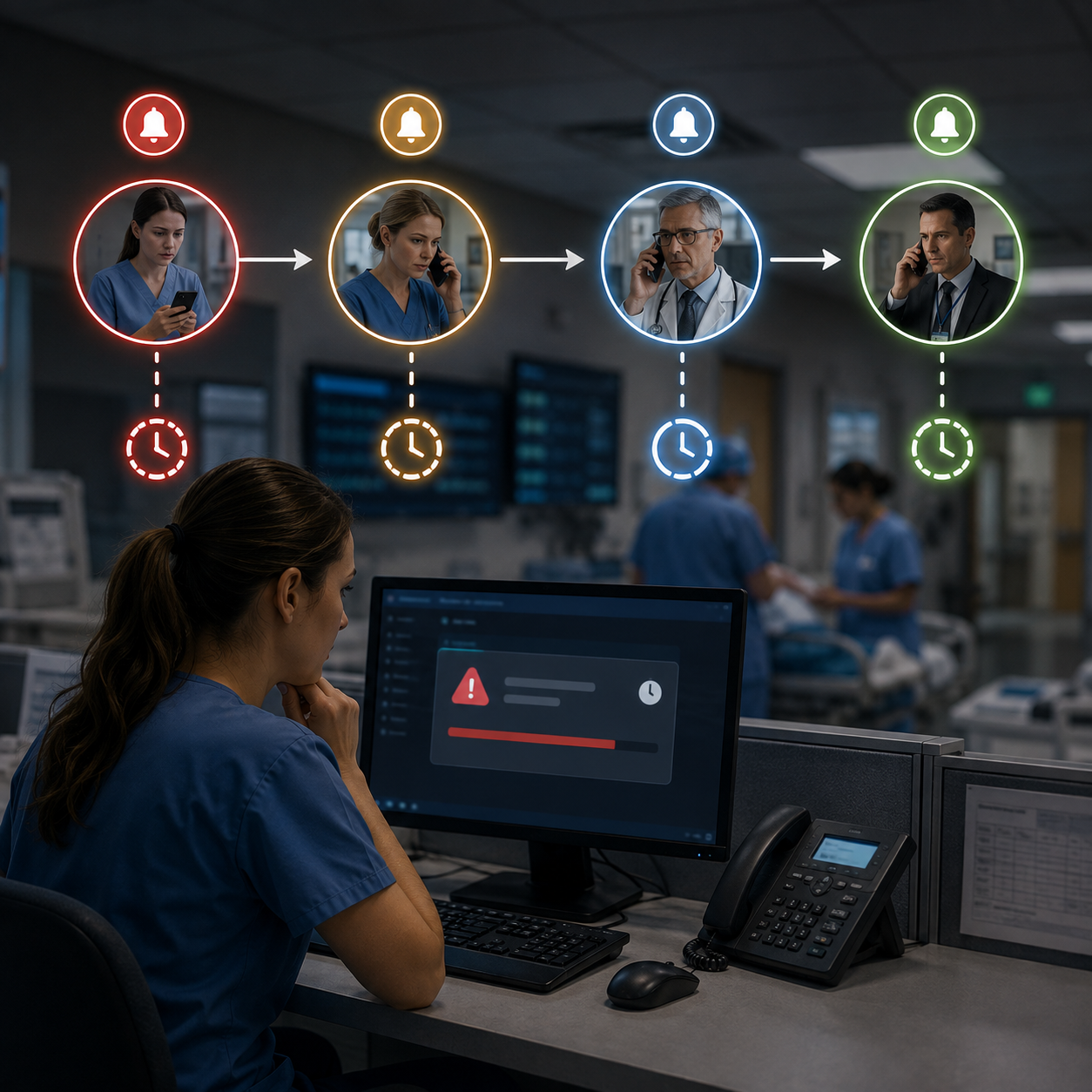
a fall alert goes to the floor nurse and charge nurse; a security breach goes to your on-site guard and SOC.

Multi-channel delivery

Multi-channel delivery

mobile push, SMS, radio integration, or your existing hospital paging system.

Escalation logic

Escalation logic

if the first alert isn't acknowledged in a set window, it automatically escalates up the chain.

Why Easycomm

Runs on the cameras and systems you already have

Hospitals don't have budget for rip-and-replace, and we don't ask for it.

ONVIF & multi-brand support -

Hikvision, Axis, Hanwha, Dahua and most IP cameras installed in the last decade plug straight in.

Existing VMS & NVR compatibility -

Easycomm layers analytics on top of your current video management system. Nothing gets replaced.

Access control integration -

connects to the badge and door systems already protecting your NICU, pharmacy, and restricted wings.

Cloud, on-prem, or hybrid -

deploy however your IT and compliance team requires it.

Low-bandwidth mode -

built for hospital networks where clinical systems get bandwidth priority.

Real Results · Precision Auto Parts

Case Study: How Meridian Valley General cut ward response time by 71%

**Meridian Valley General, a 260-bed regional hospital with four inpatient wards, a NICU, and a pharmacy wing, was facing repeated unauthorized-access incidents, delayed incident reviews, manual fall monitoring, and undetected tailgating in the NICU. Easycomm deployed AI-powered video analytics across the hospital, integrating with its existing cameras and badge systems to deliver real-time monitoring and go live in just 12 days.**

71% faster

average response time to patient falls (from 9 minutes to under 3)

100%

of after-hours NICU zone breaches flagged and escalated in real time

4x more

wandering-patient incidents caught before the patient left the ward

Zero

new cameras purchased - existing hardware, new capability

"We stopped finding out about falls from an incident report the next morning," Meridian Valley's Director of Patient Safety told us. "Now the charge nurse knows before the patient's even back in bed."

Why Easycomm

Built for Municipal Reality, Not a Vendor Demo

No forklift upgrade, literally or figuratively. Easycomm layers onto the surveillance infrastructure you've already paid for.

Works with what's already installed

ONVIF-compliant IP cameras, most major brands (Hikvision, Dahua, Axis, Hanwha), and analog-to-IP bridges for legacy poles. Your existing NVR or VMS stays in place - Easycomm layers on top.

Deploys in weeks, not budget cycles

Typical single-corridor rollouts go live in 10–15 business days. Multi-agency, city-wide deployments run 4–8 weeks depending on network readiness.

Built around public accountability.

Retention periods, access permissions, and biometric matching are configurable to your policies, supporting transparency and compliance with GDPR and emerging surveillance regulations.

Plugs into dispatch, not around it.

Open APIs and webhooks connect to CAD/dispatch systems, transit ops software, and public safety alerting tools - so an alert doesn't sit in a separate dashboard nobody checks.

Frequently Asked Questions
Book a consultation

Ready to Build Something That Actually Ships?

Book a Free Consultation →
In most cases, yes. Easycomm supports any ONVIF-compliant IP camera and major brands like Hikvision, Axis, Hanwha, and Dahua. Older analog cameras can be bridged in through encoders, so a full hardware replacement is rarely necessary.
A single-ward or single-building deployment typically goes live within 7 to 14 business days after the initial site survey. Multi-building hospital campuses generally take 3 to 5 weeks, depending on network readiness and the number of zones requiring configuration.
Easycomm is built to support HIPAA-aligned deployments. Video and metadata are encrypted both in transit and at rest, access is role-based, and every view is logged in an audit trail. Detection zones can be configured to avoid capturing PHI in patient rooms or exam areas, and a Business Associate Agreement (BAA) is provided as part of every healthcare deployment.
Yes. Easycomm connects via open APIs and webhooks to most major badge and access control platforms, VMS systems, and hospital paging or dispatch tools, allowing tailgating detection and zone alerts to work alongside your existing security infrastructure.
Both. Easycomm combines patient safety features such as fall and wander detection with physical security capabilities including restricted-zone monitoring and tailgating detection, all managed from a single unified dashboard.

Stop reacting to incident reports. Start preventing them.

Every shift your cameras spend just recording is a shift where a fall, a wander, or a breach goes unanswered until someone reviews the tape.

See exactly how Easycomm's hospital security system fits your wards, your cameras, and your staff - with a live walkthrough on your own footage, not a slide deck.

Book a Free Demo Talk to Our Team
Scroll to Top