
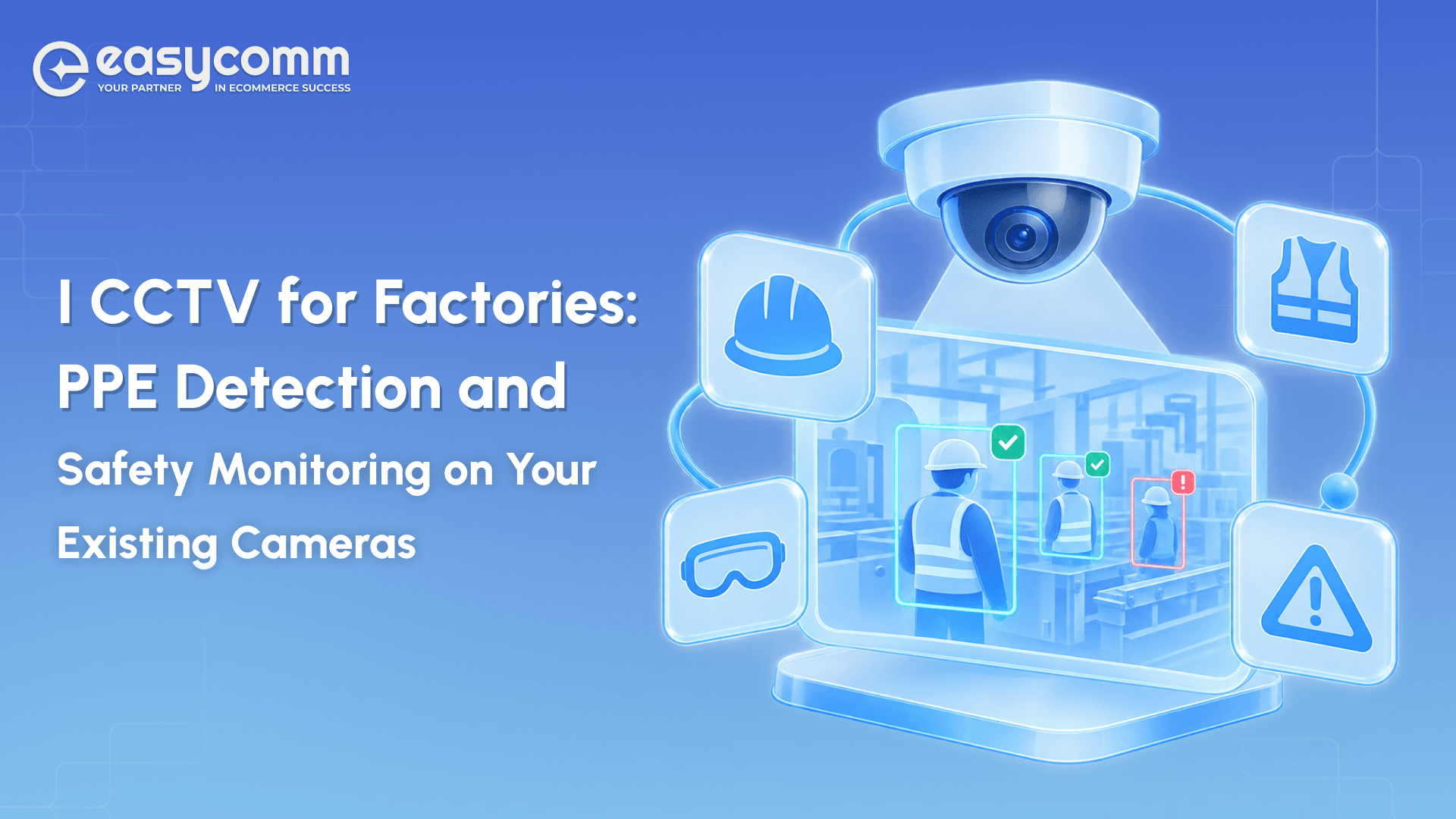
AI CCTV for Factories: PPE Detection and Safety Monitoring on Your Existing Cameras
Summary: An AI CCTV system adds computer vision to the cameras a factory already has. It watches for missing PPE, restricted-zone entry, fire and smoke, and turns each detection into an event a supervisor reviews. You usually do not need new “AI cameras”, just software that analyses your existing video.
What Is an AI CCTV System?
A traditional CCTV system records video that someone has to watch. An AI CCTV system analyses the video as it happens and flags what matters: a worker without a helmet, a person in a restricted area, smoke near a machine. Supervisors get alerts instead of hours of footage.
Do You Need New AI Cameras?
Often not. Easycomm’s video analytics platform runs on existing ONVIF-compatible cameras and recorders, which most modern CCTV setups support. The intelligence sits in the software, so you can start with the cameras already on your floor.
What AI CCTV Can Detect on a Factory Floor
- PPE detection: helmets, vests and other required protective equipment
- Restricted-zone and line-crossing alerts for dangerous or authorised-only areas
- Fire, smoke and smoking in prohibited zones
- Person and vehicle detection, including vehicles at the gate against expected trucks
- Loitering detection and real-time alerting
A Person Always Confirms
Good AI CCTV supports supervisors; it does not replace their judgement. In Easycomm’s deployments every important detection becomes an event for a person to review and confirm, never an automatic violation. That keeps false alarms from disrupting the floor and keeps people accountable for decisions.
Real Example: Mohini Health & Hygiene, Pithampur
At this hygiene products manufacturer, cameras monitor PPE, restricted-area entry, fire, smoke and smoking alongside counting at inward, pressing, packing and loading. Each safety detection goes to a person for review. Read the full case study in Computer Vision for Manufacturing.
How to Roll Out AI CCTV in a Factory
- List the risks you most need to see: PPE, restricted zones, fire, vehicles.
- Check your cameras: coverage, angles and whether they are ONVIF-compatible.
- Pilot one area, such as one line or one gate, and measure alert accuracy.
- Agree on the review process: who gets alerts, and how they confirm or dismiss them.
- Expand to more areas once the pilot works.
Questions to Ask an AI CCTV Vendor
- Does it work with our existing cameras and recorders?
- How do you measure and report detection accuracy?
- Who reviews alerts, and how are false alarms handled?
- What happens when we add a new camera angle or area?
- Where is video processed and stored, and who can access it?
More questions in our vendor checklist for computer vision.
Get Started
See AI video analytics for manufacturing or talk to our team about a pilot on your floor.
Frequently Asked Questions
CCTV with computer vision software that analyses video in real time and alerts staff to safety and security events.
Yes. PPE detection is a core use case: it flags workers without required equipment such as helmets or vests.
Usually not. Easycomm’s platform runs on existing ONVIF-compatible cameras and recorders.
No. Detections are routed to people for review; the system supports their judgement.